
Peptide Sciences Bio ·11 products
Cognitive Research Peptides
Cognitive research peptides are used in neuroscience to study neurotrophic signaling, neurotransmitter systems, synaptic plasticity and sleep. The range includes the Russian-developed Semax and Selank families, growth factor potentiators and ion channel tools.
Semax is a heptapeptide built from the ACTH (4-7) fragment extended with a Pro-Gly-Pro tail that protects it from enzymatic breakdown. It has no hormonal activity of its own and is studied mainly for its effects on brain-derived neurotrophic factor and in cerebral ischemia models. Selank uses the same stabilizing tail on a tuftsin-derived core and is studied for GABAergic signaling and neuroimmune effects. Both are also supplied as N-acetyl amidated analogs, where protective caps on each end are examined for improved stability.
Beyond those families, Dihexa is a small angiotensin IV derivative that potentiates hepatocyte growth factor signaling at the c-Met receptor and is studied in synaptogenesis research. P21 is derived from ciliary neurotrophic factor and examined in neurogenesis models, FGL activates FGFR1 by mimicking the neural cell adhesion molecule, and PE-22-28 blocks the TREK-1 potassium channel. DSIP, first isolated from rabbit brain in 1977, remains a standard tool in sleep and stress research.
All cognitive research peptides are synthesized and tested in the USA with a lot-linked Certificate of Analysis.
Browse by research area
- Metabolic & GLP-Class Research Peptides23 products
- Growth Hormone & Growth Factor Research Peptides54 products
- Regenerative & Recovery Research Peptides16 products
- Skin, Anti-Aging & Dermal Research Peptides39 products
- Immune & Inflammation Research Peptides10 products
- Cognitive Research Peptides11 products
- Hormonal Research Peptides8 products
- Research Peptide Blends & Stacks37 products
- Bioregulator Peptides16 products
- Research Compounds11 products
- Research Supplies1 products
Showing 1–11 of 11 products
-
Bioregulators
Cortagen Peptide 20mg (Bioregulator)
Cortagen 20mg is a short synthetic peptide bioregulator (Ala-Glu-Asp-Pro) associated in the Khavinson research literature with brain cortex tissue.
$65.00 -
Cognitive
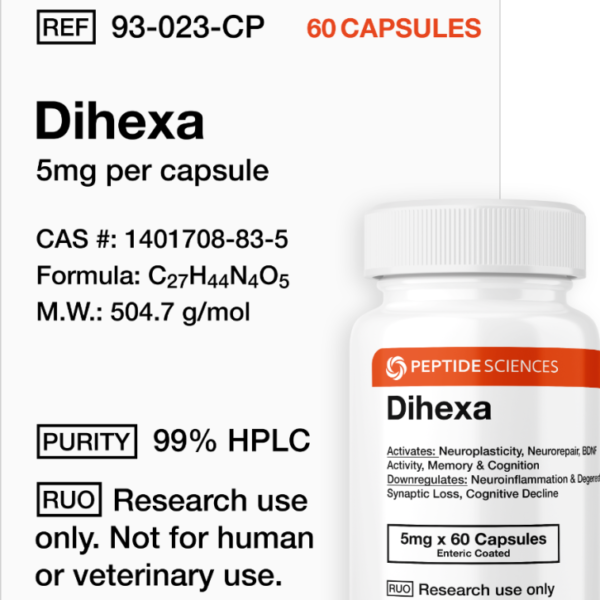
Dihexa Peptide (5mg x 60 Capsules = 300mg)
Dihexa 5mg capsules (60 count) is a small, orally active peptide derivative of angiotensin IV that potentiates hepatocyte growth factor…
Original price was: $195.00.$170.00Current price is: $170.00. -
Cognitive
DSIP Peptide 5mg
DSIP 5mg is a nonapeptide first isolated from rabbit brain and studied in sleep research.
$50.00 -
Cognitive
FGL-S 10mg
FGL-S 10mg is a peptide derived from the neural cell adhesion molecule (NCAM) that activates fibroblast growth factor receptor 1.
-
Cognitive
N-Acetyl Selank Amidate 10mg
N-Acetyl Selank Amidate 10mg is a Selank analog with an acetylated N-terminus and amidated C-terminus for improved stability.
$70.00 -
Cognitive
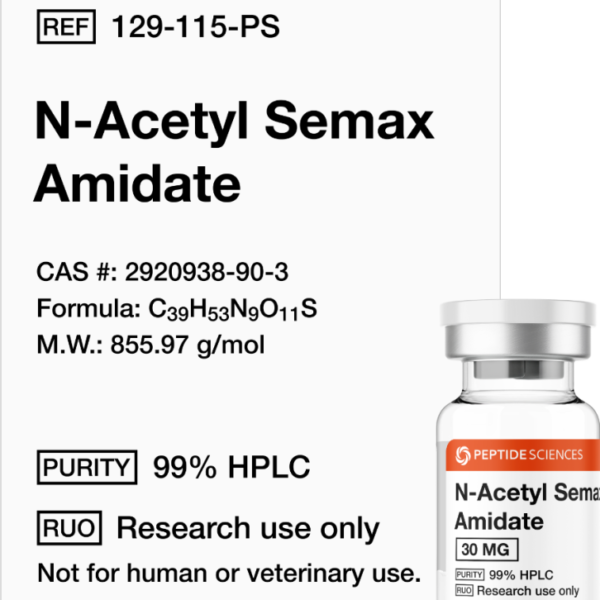
N-Acetyl Semax Amidate 30mg
N-Acetyl Semax Amidate 30mg is a Semax analog with an acetylated N-terminus and amidated C-terminus for improved stability.
$75.00 -
Cognitive
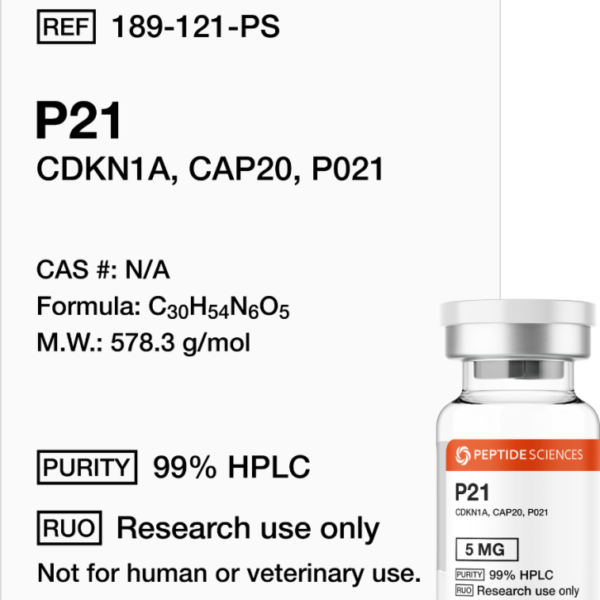
P21 Peptide 5mg
P21 5mg is a small synthetic peptide derived from ciliary neurotrophic factor (CNTF), studied in neurogenesis research.
$120.00 -
Cognitive
PE-22-28 Peptide 8mg
PE-22-28 8mg is a seven-amino-acid analog of spadin that inhibits the TREK-1 potassium channel.
$60.00 -
Bioregulators
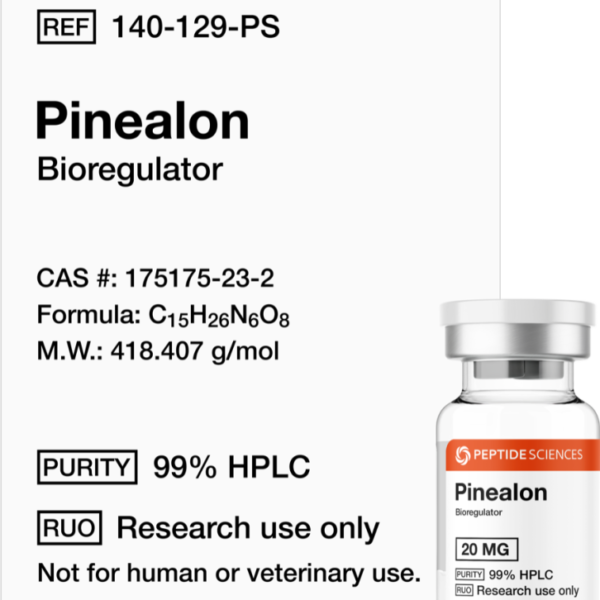
Pinealon 20mg (Bioregulator)
Pinealon 20mg is a short synthetic peptide bioregulator (Glu-Asp-Arg) associated in the Khavinson research literature with brain and nervous tissue.
$75.00 -
Cognitive
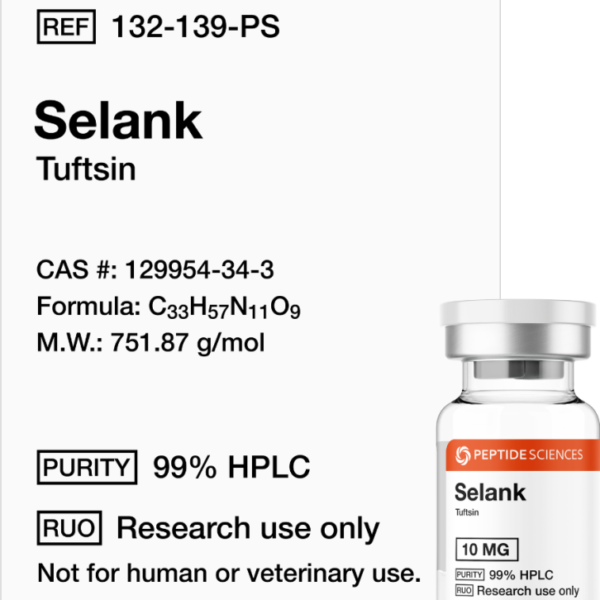
Selank Peptide 10mg
Selank 10mg is a synthetic heptapeptide analog of the immunomodulatory peptide tuftsin.
$55.00 -
Cognitive
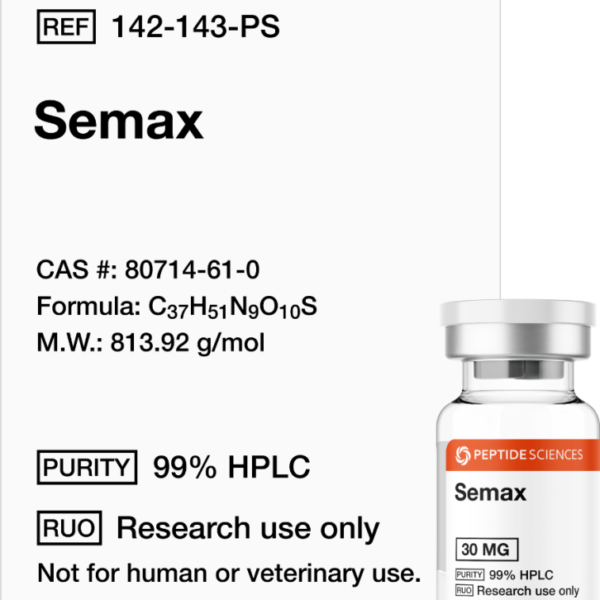
Semax Peptide 30mg
Semax 30mg is a synthetic heptapeptide derived from the ACTH (4-7) fragment, extended with Pro-Gly-Pro for stability.
$75.00




Questions
Cognitive Research Peptides: FAQ
What is the difference between Semax and Selank?
Semax derives from a fragment of ACTH and is studied mainly for BDNF signaling and neuroprotection. Selank derives from tuftsin and is studied for GABAergic and neuroimmune effects. Both use the same Pro-Gly-Pro stabilizing tail.
What do the N-acetyl amidate versions change?
An acetyl group on one end and an amide on the other protect the peptide from enzymes that trim amino acids from the ends, which researchers study for improved stability compared with the unmodified peptide.
Are these compounds approved anywhere?
Semax and Selank are registered as medicines in Russia but not in the United States. Our products are research-grade materials sold strictly for laboratory use.
How should these peptides be stored?
Store the lyophilized powder at −20°C, protected from light and moisture. Short-term storage at 2–8°C is acceptable. See our reconstitution and storage guide for solution handling.
All Peptide Sciences Bio products are sold for laboratory research use only and are not intended for human or veterinary use. Lab results · Reconstitution guide · Contact us