
Peptide Sciences Bio ·54 products
Growth Hormone & Growth Factor Research Peptides
Growth hormone research peptides are used to study how the body controls growth hormone release and what happens downstream once it is secreted. This is our largest category, covering GHRH analogs, growth hormone secretagogues, IGF-1 variants, mechano growth factor and follistatin.
Growth hormone secretion is governed by two stimulatory signals that work through separate receptors. Growth hormone-releasing hormone acts on the GHRH receptor and raises cAMP in pituitary somatotrophs; ghrelin and the synthetic GHRPs act on GHS-R1a, which signals through calcium and also counteracts somatostatin. Because the pathways are distinct, research consistently finds that combining a GHRH analog with a GHRP produces a greater response than either alone. That synergy is why sermorelin, tesamorelin and CJC-1295 (no DAC) are so often studied alongside ipamorelin, hexarelin, GHRP-2 and GHRP-6.
Downstream of growth hormone, the insulin-like growth factor axis is represented by IGF-1 LR3 and IGF-1 DES, both engineered to reduce binding to IGF binding proteins, plus MGF and PEG-MGF, peptides from the E-domain of the IGF-1Ec splice variant expressed in muscle after mechanical stress. Follistatin 315 and 344 are supplied for myostatin and activin research, and MK-677 provides an orally active, non-peptide route to ghrelin receptor activation.
Alongside single compounds, we supply pre-mixed research blends and multi-vial kits so laboratories can run combination studies with consistent ratios from batch to batch. Every item is made and tested in the USA, with a lot-linked Certificate of Analysis published for each batch.
Browse by research area
- Metabolic & GLP-Class Research Peptides23 products
- Growth Hormone & Growth Factor Research Peptides54 products
- Regenerative & Recovery Research Peptides16 products
- Skin, Anti-Aging & Dermal Research Peptides39 products
- Immune & Inflammation Research Peptides10 products
- Cognitive Research Peptides11 products
- Hormonal Research Peptides8 products
- Research Peptide Blends & Stacks37 products
- Bioregulator Peptides16 products
- Research Compounds11 products
- Research Supplies1 products
Showing 1–24 of 54 products
-
Growth Hormone
GHRP-2 5mg
GHRP-2 5mg is a synthetic hexapeptide agonist of the ghrelin receptor (GHS-R1a), one of the most potent of the classic GHRPs.
$36.00 -
Growth Hormone
Ipamorelin + CJC-1295 no DAC (5mg x 10 Each)
Ipamorelin + CJC-1295 (no DAC) Kit (5mg, 10 + 10 vials) is a multi-vial research kit containing separately packaged vials…
Original price was: $811.75.$725.00Current price is: $725.00. -
Growth Hormone
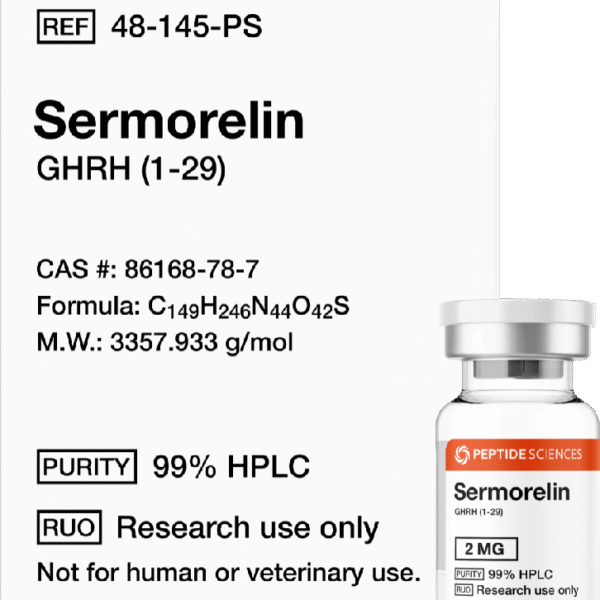
Sermorelin 2mg
Sermorelin 2mg is the 29-amino-acid active fragment of native growth hormone-releasing hormone (GRF 1-29 amide).
$35.00 -
Growth Hormone
CJC-1295 (No DAC), GHRP-2 10mg (Blend)
CJC-1295 (no DAC) + GHRP-2 10mg Blend is a single lyophilized vial combining CJC-1295 (no DAC) and GHRP-2, designed for…
$95.00 -
Growth Hormone
GHRP-2 10mg
GHRP-2 10mg is a synthetic hexapeptide agonist of the ghrelin receptor (GHS-R1a), one of the most potent of the classic GHRPs.
$50.00 -
Growth Hormone
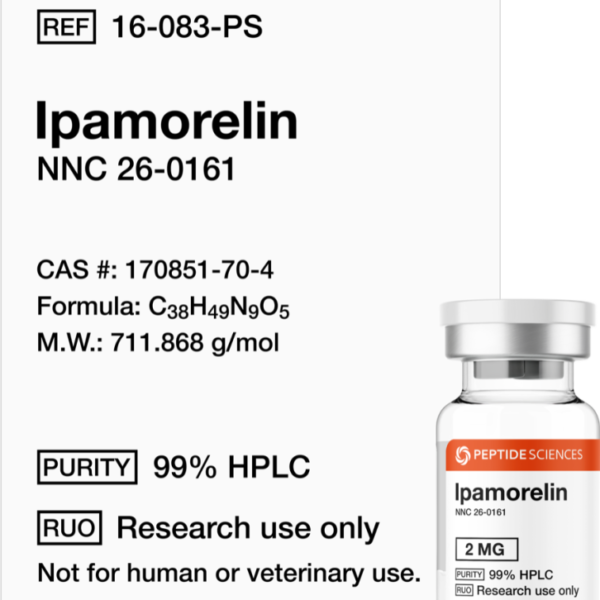
Ipamorelin 2mg
Ipamorelin 2mg is a selective synthetic pentapeptide ghrelin receptor agonist with minimal effects on cortisol and prolactin in studies.
$30.00 -
Growth Hormone
Sermorelin Peptide 5mg
Sermorelin 5mg is the 29-amino-acid active fragment of native growth hormone-releasing hormone (GRF 1-29 amide).
$55.00 -
Growth Hormone
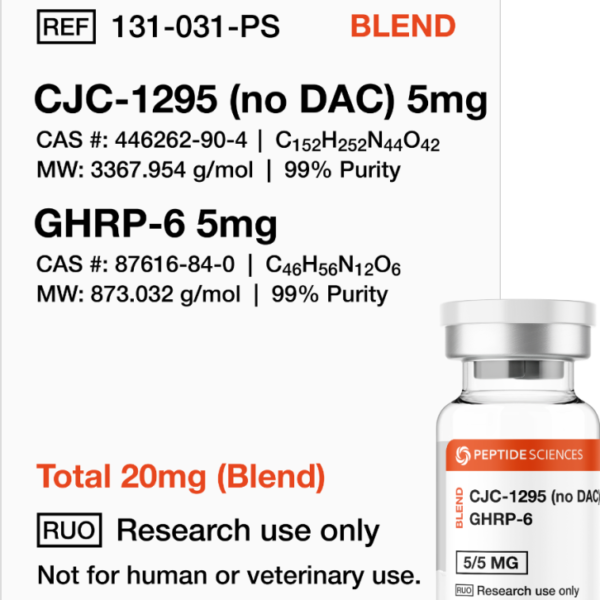
CJC-1295 (No DAC), GHRP-6 10mg (Blend)
CJC-1295 (no DAC) + GHRP-6 10mg Blend is a single lyophilized vial combining CJC-1295 (no DAC) and GHRP-6, designed for…
$95.00 -
Growth Hormone
GHRP-6 (5mg x 5) and CJC-1295 no DAC (5mg x 5)
GHRP-6 + CJC-1295 (no DAC) Kit (5 + 5 vials) is a multi-vial research kit containing separately packaged vials of…
$345.00 -
Growth Hormone
Ipamorelin Peptide 5mg
Ipamorelin 5mg is a selective synthetic pentapeptide ghrelin receptor agonist with minimal effects on cortisol and prolactin in studies.
$46.00 -
Growth Hormone
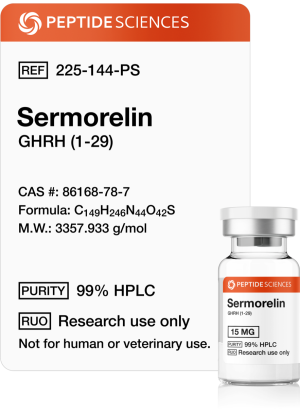
Sermorelin 15mg
Sermorelin 15mg is the 29-amino-acid active fragment of native growth hormone-releasing hormone (GRF 1-29 amide).
$125.00 -
Growth Hormone
CJC-1295 (no DAC), Hexarelin 10mg (Blend)
CJC-1295 (no DAC) + Hexarelin 10mg Blend is a single lyophilized vial combining CJC-1295 (no DAC) and Hexarelin, designed for…
$95.00 -
Growth Hormone
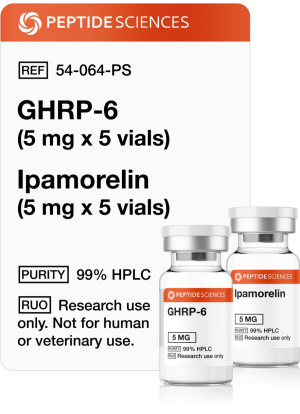
GHRP-6 (5mg x 5) and Ipamorelin (5mg x 5)
GHRP-6 + Ipamorelin Kit (5 + 5 vials) is a multi-vial research kit containing separately packaged vials of GHRP-6 and…
Original price was: $310.00.$270.00Current price is: $270.00. -
Growth Hormone
Ipamorelin Peptide 10mg
Ipamorelin 10mg is a selective synthetic pentapeptide ghrelin receptor agonist with minimal effects on cortisol and prolactin in studies.
$80.00 -
Growth Hormone
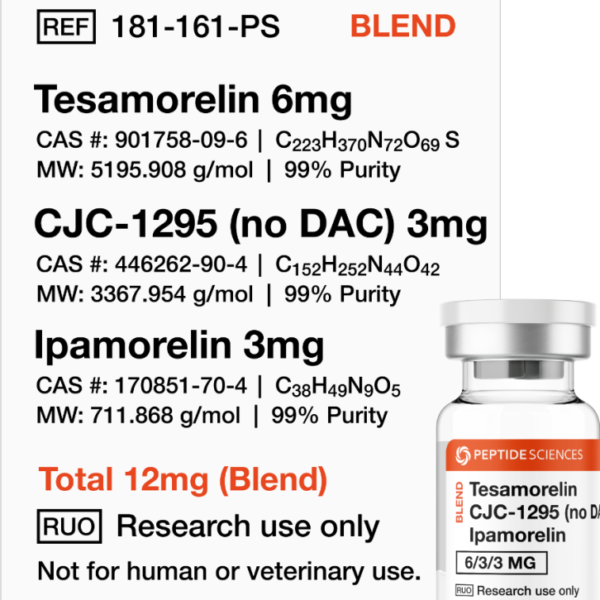
Tesamorelin + CJC-1295 (No DAC) + Ipamorelin 12mg (Blend)
Tesamorelin + CJC-1295 (no DAC) + Ipamorelin 12mg Blend is a single lyophilized vial combining Tesamorelin, CJC-1295 (no DAC) and…
$125.00 -
Growth Hormone
CJC-1295 (No DAC), Ipamorelin, GHRP-2 (Blend)
CJC-1295 (no DAC) + Ipamorelin + GHRP-2 Blend is a single lyophilized vial combining CJC-1295 (no DAC), Ipamorelin and GHRP-2,…
Original price was: $95.00.$80.00Current price is: $80.00. -
Growth Hormone
GHRP-6 + CJC-1295 no DAC (5mg x 10 = 20 vials)
GHRP-6 + CJC-1295 (no DAC) Kit (10 + 10 vials) is a multi-vial research kit containing separately packaged vials of…
Original price was: $726.75.$649.00Current price is: $649.00. -
Growth Hormone
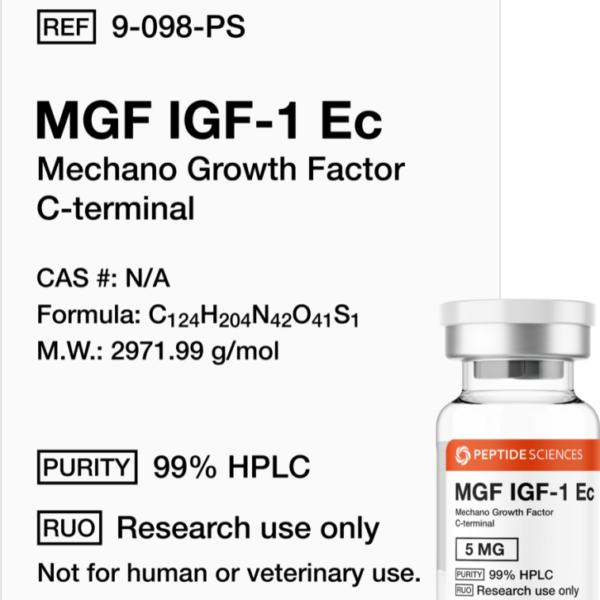
MGF Peptide IGF-1 Ec 5mg
MGF 5mg is a peptide from the E-domain of IGF-1Ec, a splice variant expressed in muscle after mechanical stress.
Original price was: $150.00.$135.00Current price is: $135.00. -
Growth Hormone
Tesamorelin, Ipamorelin 8mg (Blend)
Tesamorelin + Ipamorelin 8mg Blend is a single lyophilized vial combining Tesamorelin and Ipamorelin, designed for preclinical research on the…
$110.00 -
Growth Hormone
CJC-1295 (No DAC), Ipamorelin 10mg (Blend)
CJC-1295 (no DAC) + Ipamorelin 10mg Blend is a single lyophilized vial combining CJC-1295 (no DAC) and Ipamorelin, designed for…
$95.00 -
Growth Hormone
GHRP-6 + Ipamorelin Blend (5mg x 10 Each = 20 Vials)
GHRP-6 + Ipamorelin Kit (10 + 10 vials) is a multi-vial research kit containing separately packaged vials of GHRP-6 and…
Original price was: $697.00.$600.00Current price is: $600.00. -
Growth Hormone
MK-677 (Ibutamoren) 12.5mg (60 Capsules)
MK-677 (ibutamoren) 12.5mg (60 capsules) is an orally active, non-peptide ghrelin receptor agonist.
$150.00 -
Growth Hormone
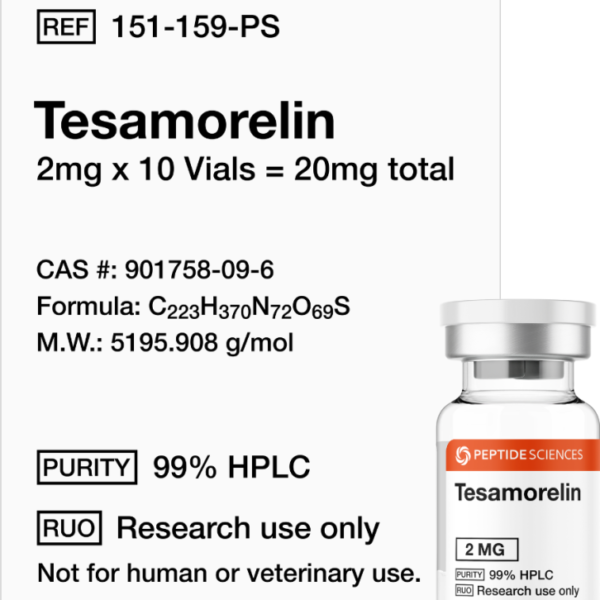
Tesamorelin Peptide 2mg (10 Vial Kit)
Tesamorelin 2mg (10-vial kit) is a stabilized analog of full-length (1-44) GHRH with an N-terminal trans-3-hexenoyl group.
Original price was: $300.00.$250.00Current price is: $250.00. -
Growth Hormone
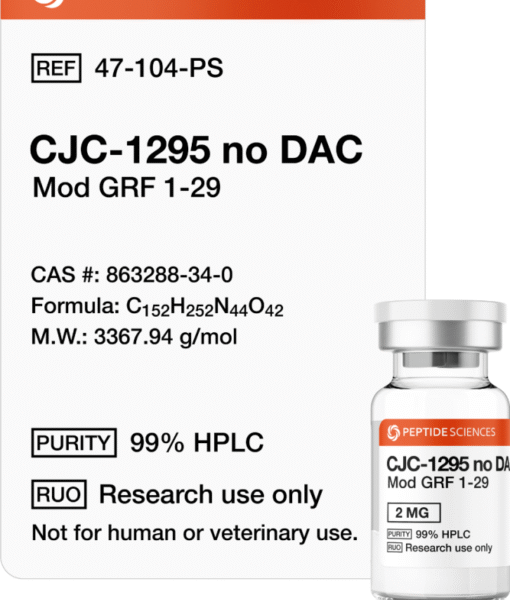
CJC-1295 no DAC 2mg (Mod GRF 1-29)
CJC-1295 (no DAC) 2mg is a modified 29-amino-acid GHRH analog that activates the GHRH receptor on pituitary somatotrophs.
$35.00













Questions
Growth Hormone & Growth Factor Research Peptides: FAQ
What is the difference between a GHRH analog and a GHRP?
GHRH analogs such as sermorelin and CJC-1295 act on the GHRH receptor. GHRPs such as ipamorelin and GHRP-2 act on the ghrelin receptor. They use separate pathways, which is why research often studies them together.
Are CJC-1295 no DAC and Mod GRF 1-29 the same compound?
Yes. Both names refer to the same tetrasubstituted 29-amino-acid GHRH analog without the Drug Affinity Complex.
Why is ipamorelin described as selective?
Research reports that ipamorelin stimulates growth hormone release with little or no increase in cortisol, prolactin or ACTH, unlike earlier GHRPs. That selectivity makes it useful for isolating growth hormone effects.
Do you supply blends and kits?
Yes. We offer pre-mixed blends in a single vial with consistent component ratios, and multi-vial kits where each compound is packaged separately so it can be prepared independently.
All Peptide Sciences Bio products are sold for laboratory research use only and are not intended for human or veterinary use. Lab results · Reconstitution guide · Contact us