
Peptide Sciences Bio ·39 products
Skin, Anti-Aging & Dermal Research Peptides
This category covers the peptides used in dermal and longevity research: copper-binding tripeptides, matrix signal peptides, neuromodulating cosmetic peptides, pigmentation compounds and the senescence and telomere tools used in aging research.
GHK-Cu is the most studied compound here. It is the copper complex of a tripeptide first isolated from human plasma in 1973, and gene-expression profiling has reported that GHK influences the activity of a large number of human genes related to tissue repair and antioxidant defence. We supply it as a 50mg vial, as capsules and in bulk sizes up to 1 gram for formulation research, alongside copper-free GHK Basic, AHK-Cu and Pal-AHK.
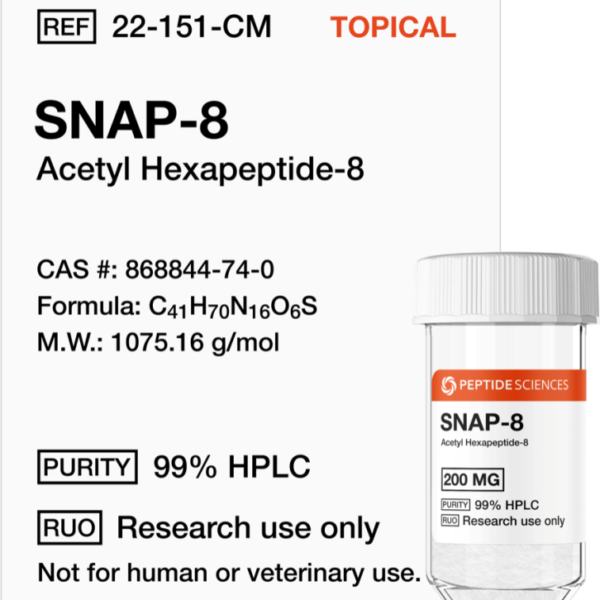
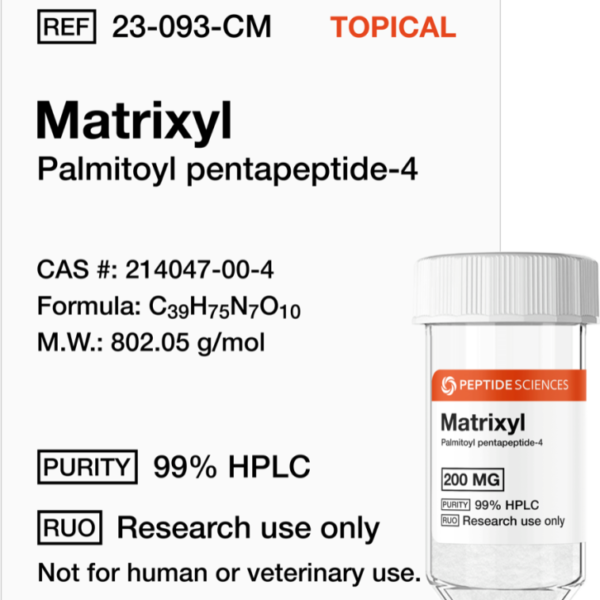
The matrix signal peptides, including Matrixyl, Pal-GHK, Rigin, Syn-Coll and Tripeptide-29, are short sequences derived from collagen and other matrix proteins. They are studied for their ability to signal fibroblasts to produce new collagen, elastin and glycosaminoglycans, usually in palmitoylated form to improve penetration in formulation work. Separately, the neuromodulating peptides, Argireline, SNAP-8, Leuphasyl, Vialox and Syn-AKE, interfere with signaling at the neuromuscular junction, each at a different point in the SNARE and nicotinic receptor pathways.
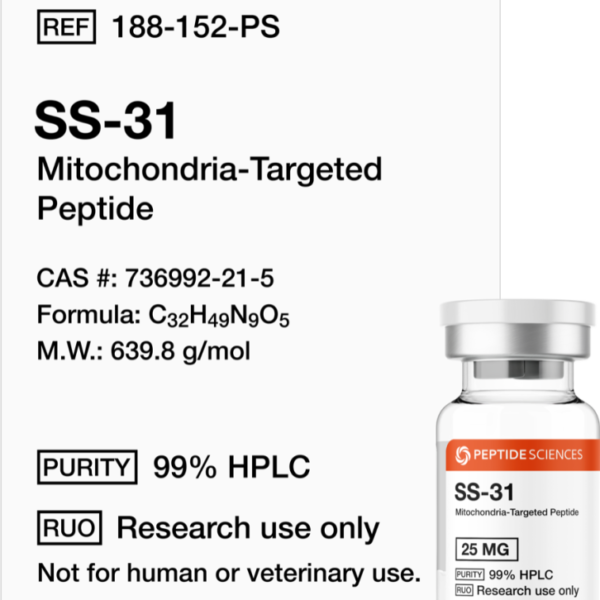
The longevity range includes Epithalon and its acetylated analog for telomerase research, FOXO4-DRI as a senolytic, OS-01 as a senomorphic, plus humanin, SS-31 and NAD+ for mitochondrial and cellular energy research.
Browse by research area
- Metabolic & GLP-Class Research Peptides23 products
- Growth Hormone & Growth Factor Research Peptides54 products
- Regenerative & Recovery Research Peptides16 products
- Skin, Anti-Aging & Dermal Research Peptides39 products
- Immune & Inflammation Research Peptides10 products
- Cognitive Research Peptides11 products
- Hormonal Research Peptides8 products
- Research Peptide Blends & Stacks37 products
- Bioregulator Peptides16 products
- Research Compounds11 products
- Research Supplies1 products
Showing 1–24 of 39 products
-
Skin & Anti-Aging
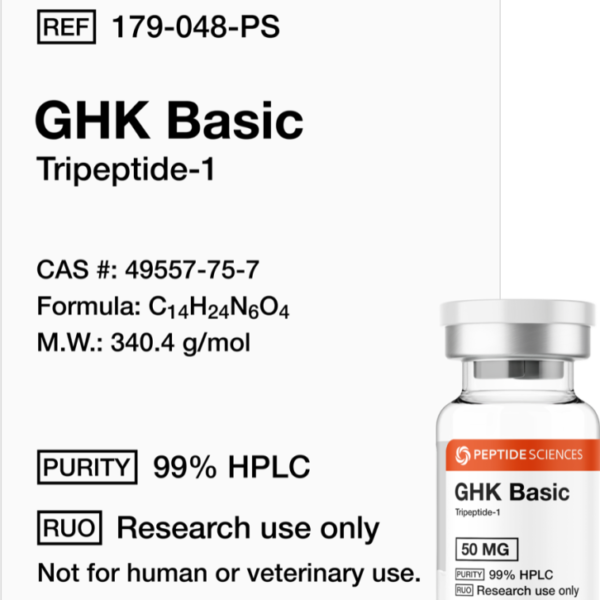
GHK Basic 50mg
GHK Basic 50mg is the copper-free GHK tripeptide (Gly-His-Lys).
$55.00 -
Skin & Anti-Aging
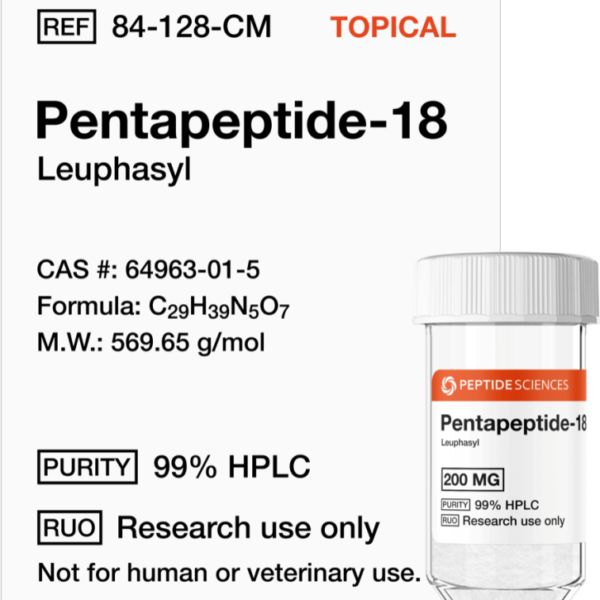
Pentapeptide-18 (Leuphasyl) 200mg (Topical)
Pentapeptide-18 (Leuphasyl) 200mg is an enkephalin-mimicking pentapeptide studied for reducing nerve cell excitability.
$230.00 -
Skin & Anti-Aging
Acetyl Hexapeptide-3 (Argireline) 200mg (Topical)
Argireline (acetyl hexapeptide-3) 200mg is a synthetic hexapeptide that mimics the N-terminal end of SNAP-25 and is studied for its…
Original price was: $220.00.$189.00Current price is: $189.00. -
Skin & Anti-Aging
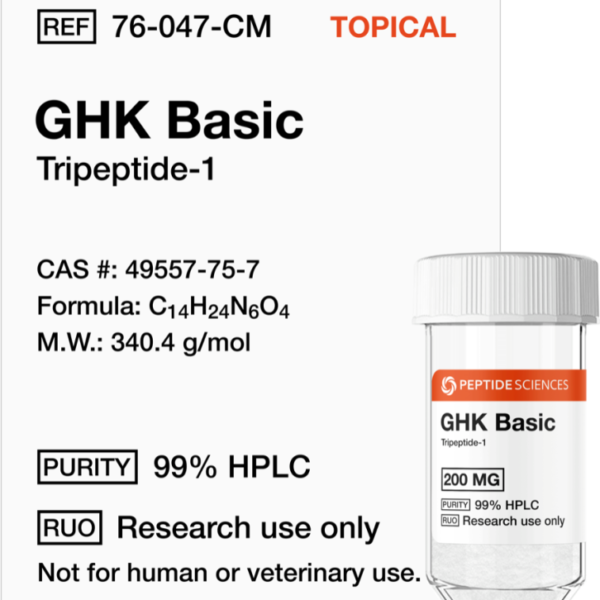
GHK Basic 200mg (Tripeptide-1) (Topical)
GHK Basic (tripeptide-1) 200mg (bulk) is the copper-free GHK tripeptide (Gly-His-Lys).
$170.00 -
Skin & Anti-Aging
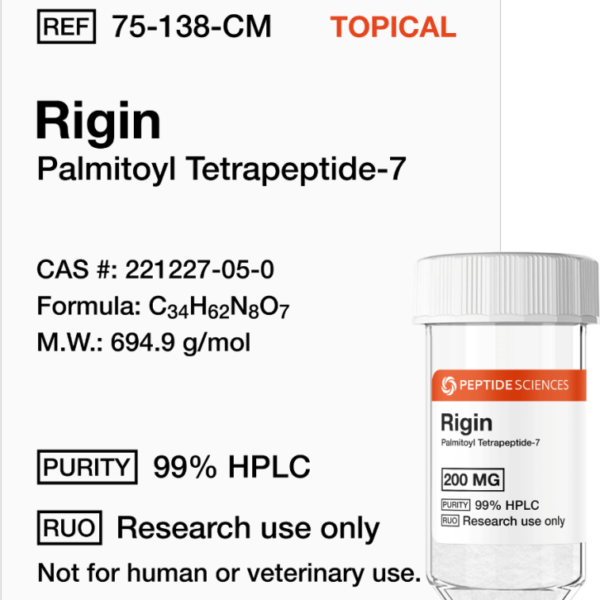
Rigin 200mg (Palmitoyl Tetrapeptide-7) (Topical)
Rigin (palmitoyl tetrapeptide-7) 200mg is a palmitoylated tetrapeptide studied for reducing interleukin-6 production in skin cells.
$200.00 -
Skin & Anti-Aging
AHK-Cu (Copper Tripeptide) 200mg (Topical)
AHK-Cu 200mg is the copper(II) complex of the tripeptide Ala-His-Lys, studied mainly in hair follicle research.
Original price was: $200.00.$180.00Current price is: $180.00. -
Skin & Anti-Aging
Humanin Peptide 10mg
Humanin 10mg is a 24-amino-acid mitochondrial-derived peptide studied for its cytoprotective activity.
Original price was: $155.00.$130.00Current price is: $130.00. -
Skin & Anti-Aging
SNAP-8 Peptide 200mg (Topical)
SNAP-8 200mg is an eight-amino-acid elongation of Argireline that mimics a longer segment of SNAP-25.
$180.00 -
Regenerative
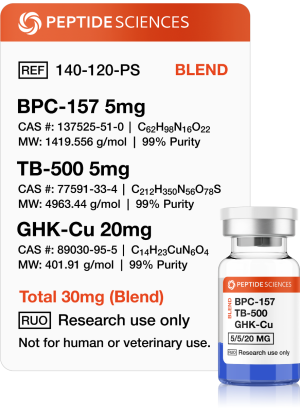
BPC-157, TB-500, GHK-Cu 30mg (Glow Blend)
The BPC-157, TB-500, GHK-Cu 30mg Glow Blend is a three-peptide research blend combining BPC-157, TB-500 and the copper peptide GHK-Cu…
Original price was: $165.00.$150.00Current price is: $150.00. -
Skin & Anti-Aging
Matrixyl 200mg (Topical)
Matrixyl (palmitoyl pentapeptide-4) 200mg is a palmitoylated pentapeptide fragment of type I procollagen that acts as a matrikine signal for…
Original price was: $200.00.$170.00Current price is: $170.00. -
Skin & Anti-Aging
SS-31 Peptide 25mg
SS-31 (elamipretide) 25mg is a mitochondria-targeted tetrapeptide that binds cardiolipin in the inner mitochondrial membrane.
$150.00 -
Regenerative
BPC-157, TB-500, GHK-Cu 60mg (Glow Blend)
The BPC-157, TB-500, GHK-Cu 60mg Glow Blend is a three-peptide research blend combining BPC-157, TB-500 and the copper peptide GHK-Cu…
Original price was: $315.00.$280.00Current price is: $280.00. -
Skin & Anti-Aging
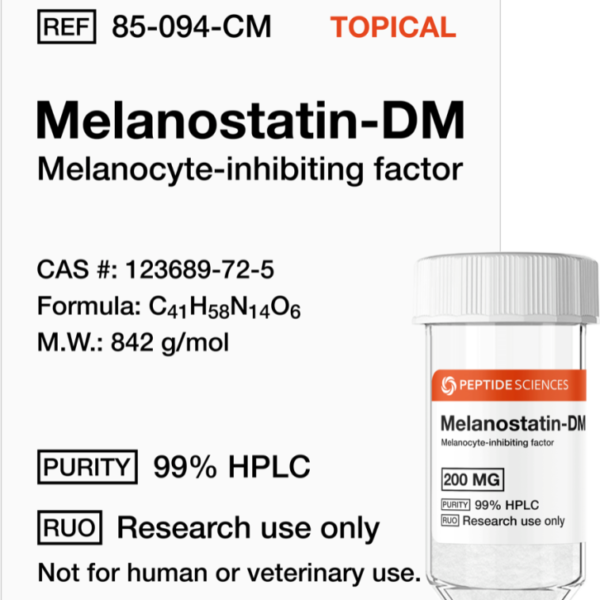
Melanostatin DM 200mg (Topical)
Melanostatin DM 200mg is a nonapeptide-1 based peptide studied as an antagonist of α-MSH at the melanocortin 1 receptor in pigmentation research.
Original price was: $230.00.$200.00Current price is: $200.00. -
Skin & Anti-Aging
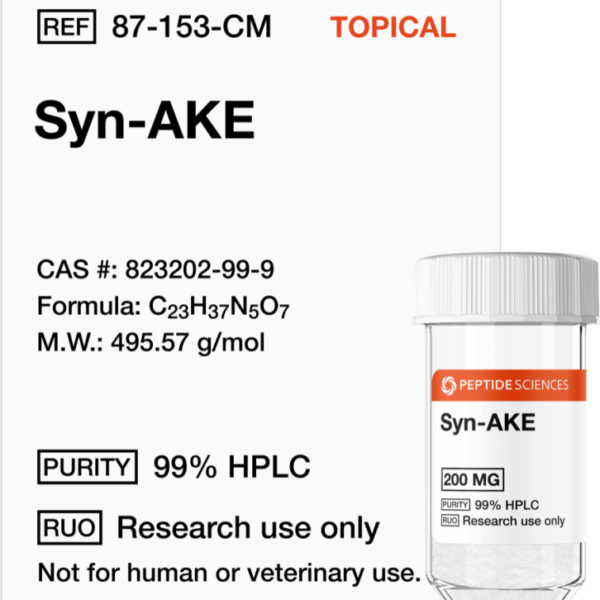
Syn-AKE 200mg (Topical)
Syn-AKE 200mg is a small synthetic peptide that mimics waglerin-1, a component of temple viper venom, and blocks muscle nicotinic receptors.
$230.00 -
Immune & Inflammation
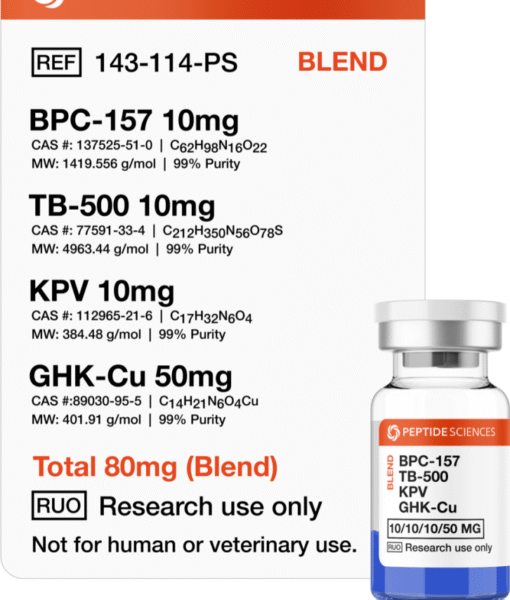
BPC-157, TB-500, KPV, GHK-Cu 80mg (Klow Blend)
The BPC-157, TB-500, KPV, GHK-Cu 80mg Klow Blend is a four-peptide research blend combining 50mg GHK-Cu with 10mg each of…
Original price was: $395.00.$345.00Current price is: $345.00. -
Skin & Anti-Aging
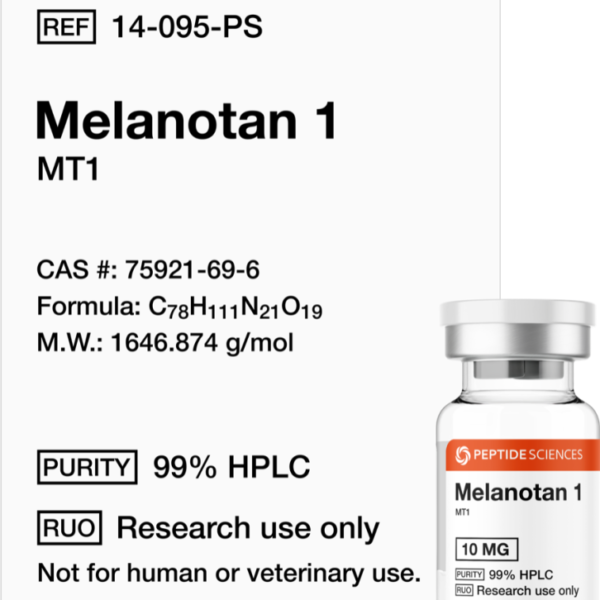
Melanotan 1 (MT1) 10mg
Melanotan 1 (afamelanotide) 10mg is a linear 13-amino-acid analog of α-MSH that activates melanocortin receptors, chiefly MC1R.
$55.00 -
Skin & Anti-Aging
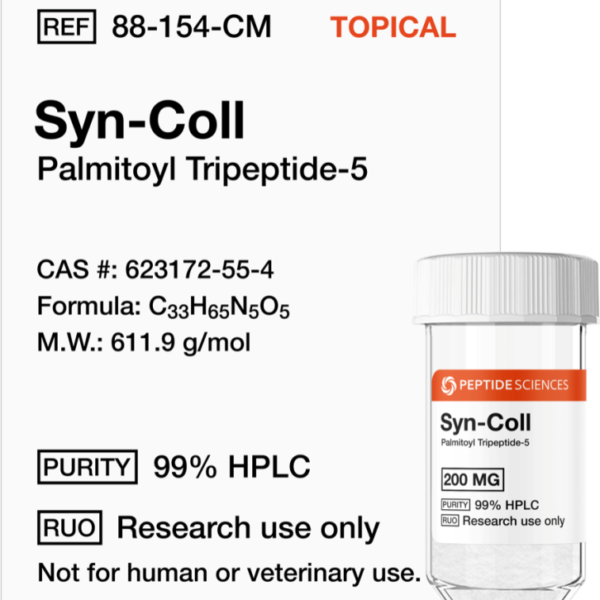
Syn-Coll (Palmitoyl Tripeptide-5) 200mg (Topical)
Syn-Coll (palmitoyl tripeptide-5) 200mg is a palmitoylated tripeptide that mimics thrombospondin-1 and is studied for activating latent TGF-β.
$230.00 -
Skin & Anti-Aging
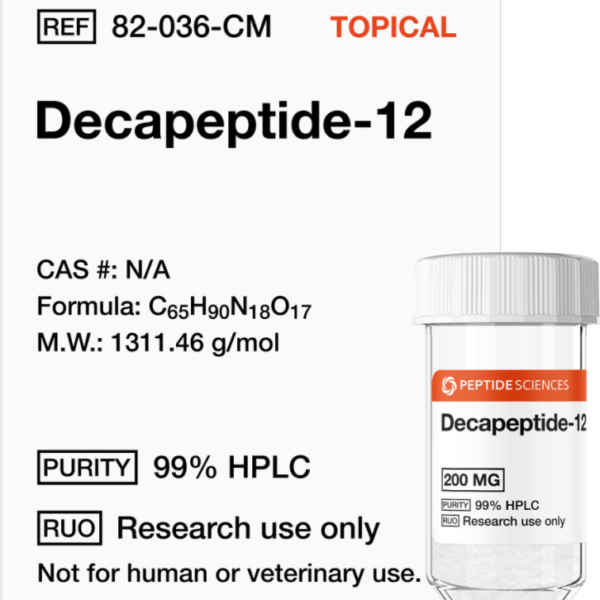
Decapeptide-12 (Topical) 200mg
Decapeptide-12 200mg is a ten-amino-acid peptide studied as a tyrosinase inhibitor in pigmentation research.
Original price was: $240.00.$210.00Current price is: $210.00. -
Skin & Anti-Aging
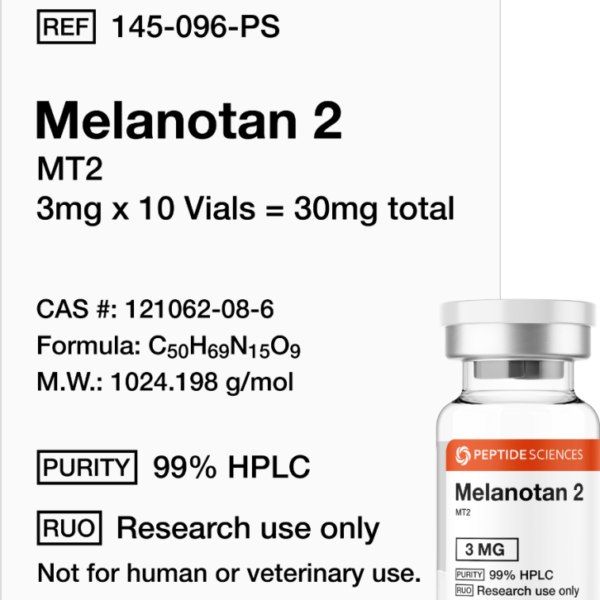
Melanotan 2 (MT2) (3mg x 10 Vials = 30mg)
Melanotan 2 (3mg × 10 vials) is a cyclic heptapeptide analog of α-MSH that activates multiple melanocortin receptors.
Original price was: $140.00.$120.00Current price is: $120.00. -
Skin & Anti-Aging
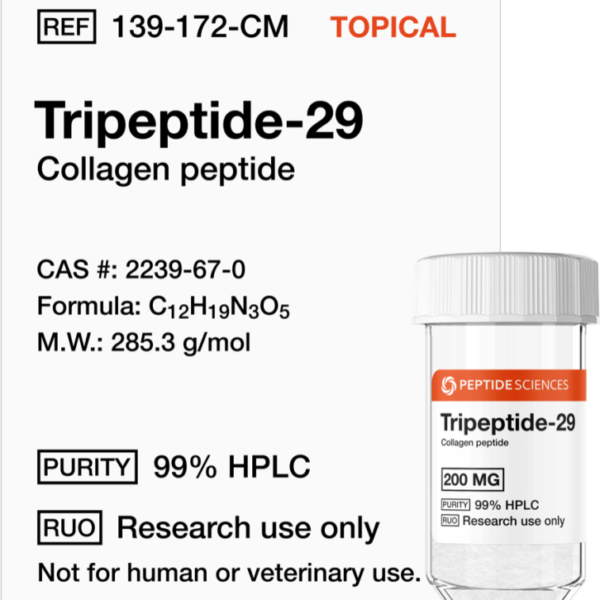
Tripeptide-29 200mg (Collagen Peptide) (Topical)
Tripeptide-29 200mg is the Gly-Pro-Hyp tripeptide, the main repeating unit of collagen.
Original price was: $200.00.$175.00Current price is: $175.00. -
Skin & Anti-Aging
Epitalon (Epithalon) Capsules 3mg (60 capsules) (Telomere Length)
Epithalon 3mg capsules (60 count) is a synthetic tetrapeptide (Ala-Glu-Asp-Gly) based on epithalamin, a pineal gland extract, studied in telomere…
$50.00 -
Skin & Anti-Aging
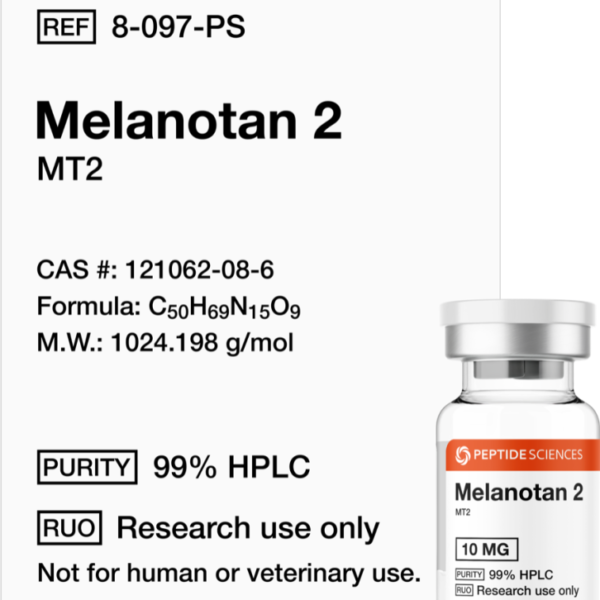
Melanotan 2 Peptide (MT2) 10mg
Melanotan 2 10mg is a cyclic heptapeptide analog of α-MSH that activates multiple melanocortin receptors.
$50.00 -
Skin & Anti-Aging
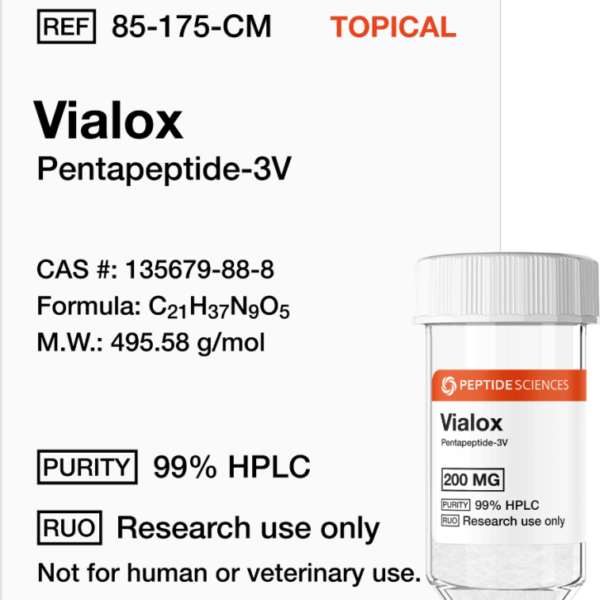
Vialox (Pentapeptide-3V) 200mg (Topical)
Vialox (pentapeptide-3V) 200mg is a pentapeptide studied as a competitive antagonist of the muscle-type nicotinic acetylcholine receptor.
$220.00 -
Skin & Anti-Aging
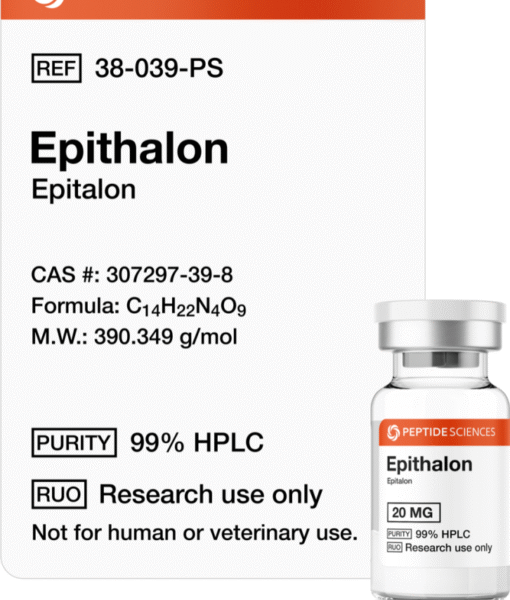
Epithalon (Epitalon) 20mg
Epithalon 20mg is a synthetic tetrapeptide (Ala-Glu-Asp-Gly) based on epithalamin, a pineal gland extract, studied in telomere and aging research.
$95.00





Questions
Skin, Anti-Aging & Dermal Research Peptides: FAQ
What is GHK-Cu?
GHK-Cu is the copper(II) complex of glycyl-L-histidyl-L-lysine, a tripeptide found naturally in human plasma. It is studied in research on collagen synthesis, matrix remodeling, wound models and hair follicle biology.
What does “topical” mean on these products?
It indicates a bulk lyophilized powder supplied for cosmetic formulation research rather than a finished product. All items are for laboratory research only and are not cosmetics.
What is the difference between a senolytic and a senomorphic?
A senolytic such as FOXO4-DRI is studied for eliminating senescent cells. A senomorphic such as OS-01 is studied for reducing the harmful signaling those cells produce without removing them.
Is Epithalon the same as Epitalon?
Yes. Both spellings refer to the same synthetic tetrapeptide, Ala-Glu-Asp-Gly, studied in telomerase and aging research.
All Peptide Sciences Bio products are sold for laboratory research use only and are not intended for human or veterinary use. Lab results · Reconstitution guide · Contact us