
Peptide Sciences Bio ·8 products
Hormonal Research Peptides
Hormonal research peptides are used to study the endocrine signaling axes that connect the brain to the body. This category covers the hypothalamic-pituitary-gonadal axis, the thyroid axis and the oxytocin and melanocortin systems.
The reproductive axis is the main focus. Kisspeptin-10 acts upstream on the KISS1 receptor of GnRH neurons and is now understood as a master regulator of reproductive function and the onset of puberty. Gonadorelin is identical to native GnRH and, because its effect depends on pulse timing, it is used to study how the pattern of signaling shapes pituitary responses. Triptorelin carries a D-tryptophan substitution that makes it far more potent and longer-lasting, which is why it is widely used in receptor desensitization research.
Alongside the HPG axis, TRH (protirelin) is the hypothalamic tripeptide that drives thyroid-stimulating hormone release and is also studied as a central neurotransmitter. Oxytocin, a nine-amino-acid cyclic hormone, features in social neuroscience and stress research. PT-141 (bremelanotide), developed from Melanotan 2, acts on central melanocortin receptors rather than on blood vessels, making it a distinctive tool in neuroendocrine research.
Every compound is made in the USA, HPLC-MS verified and supplied with a batch Certificate of Analysis.
Browse by research area
- Metabolic & GLP-Class Research Peptides23 products
- Growth Hormone & Growth Factor Research Peptides54 products
- Regenerative & Recovery Research Peptides16 products
- Skin, Anti-Aging & Dermal Research Peptides39 products
- Immune & Inflammation Research Peptides10 products
- Cognitive Research Peptides11 products
- Hormonal Research Peptides8 products
- Research Peptide Blends & Stacks37 products
- Bioregulator Peptides16 products
- Research Compounds11 products
- Research Supplies1 products
Showing 1–8 of 8 products
-
Hormonal
Gonadorelin 10mg
Gonadorelin 10mg is a synthetic peptide identical to native gonadotropin-releasing hormone (GnRH).
$85.00 -
Hormonal
Kisspeptin-10 5mg
Kisspeptin-10 5mg is the shortest active fragment of kisspeptin, which activates the KISS1 receptor upstream of GnRH.
$65.00 -
Hormonal
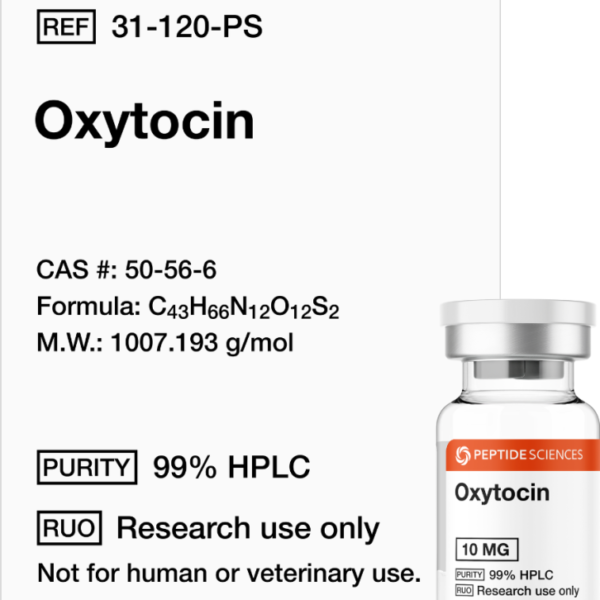
Oxytocin 10mg (6000 IU)
Oxytocin 10mg (6,000 IU) is a nine-amino-acid cyclic neuropeptide hormone produced in the hypothalamus.
$65.00 -
Hormonal
PT-141 (3mg x 10 Vials = 30mg)
PT-141 (3mg × 10 vials) is a cyclic heptapeptide melanocortin agonist acting mainly on MC3R and MC4R in the brain.
$140.00 -
Hormonal
PT-141 Peptide 10mg
PT-141 (bremelanotide) 10mg is a cyclic heptapeptide melanocortin agonist acting mainly on MC3R and MC4R in the brain.
$55.00 -
Hormonal
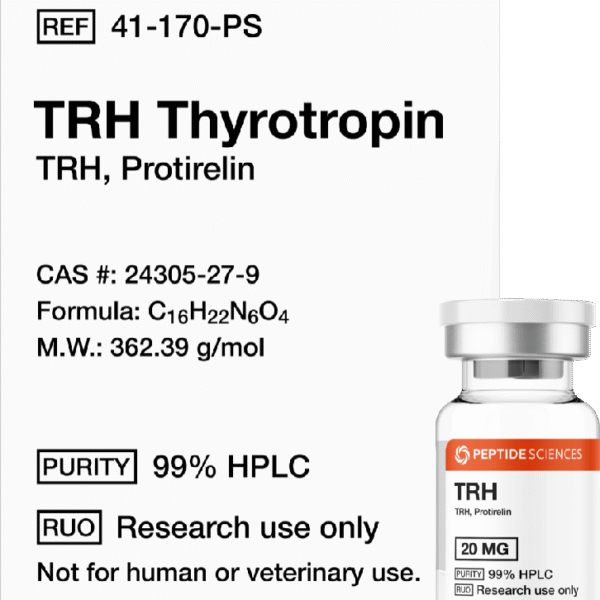
TRH Thyrotropin (Protirelin) 20mg
TRH (protirelin) 20mg is thyrotropin-releasing hormone (protirelin), the hypothalamic tripeptide that controls the thyroid axis.
$95.00 -
Hormonal
TRH Thyrotropin (Protirelin) 50mg
TRH (protirelin) 50mg is thyrotropin-releasing hormone (protirelin), the hypothalamic tripeptide that controls the thyroid axis.
Original price was: $200.00.$170.00Current price is: $170.00. -
Hormonal
Triptorelin Peptide (GnRH) 2mg
Triptorelin 2mg is a synthetic GnRH analog with a D-tryptophan substitution at position 6 that increases potency and duration.
$42.00





Questions
Hormonal Research Peptides: FAQ
What is kisspeptin and why does it matter?
Kisspeptin acts on the KISS1 receptor of GnRH neurons in the hypothalamus and controls GnRH release. It is now understood as a master regulator of the reproductive axis and the onset of puberty.
How does gonadorelin differ from triptorelin?
Gonadorelin has the native GnRH sequence and a half-life of minutes, which suits pulsatile signaling research. Triptorelin has a D-tryptophan substitution that makes it more potent and longer-lasting, and is used in desensitization research.
What makes PT-141 different from Melanotan 2?
They differ by a single change at the C-terminus. That shifts the receptor profile toward central melanocortin receptors and reduces activity on pigmentation.
Are these approved medicines?
Several of these molecules are active ingredients in approved prescription medicines. Our products are research-grade materials, not approved drug products, and are for laboratory use only.
All Peptide Sciences Bio products are sold for laboratory research use only and are not intended for human or veterinary use. Lab results · Reconstitution guide · Contact us