
Peptide Sciences Bio ·16 products
Bioregulator Peptides
Peptide bioregulators are very short peptides, usually two to four amino acids long, developed by Professor Vladimir Khavinson and colleagues at the St. Petersburg Institute of Bioregulation and Gerontology. Each is associated with a specific tissue.
The work began with extracts of animal tissues, called cytomedins, and later identified short synthetic sequences reported to reproduce their activity. The proposed mechanism is that peptides of this size can enter the cell nucleus, bind specific DNA sequences and influence gene expression in a tissue-specific way. Our range covers sixteen bioregulators, including Thymalin and Thymagen for thymus and immune research, Pinealon and Cortagen for neural tissue, Cardiogen for cardiac cells, Cartalax for cartilage, Livagen and Ovagen for liver, Pancragen for pancreatic tissue, Vesugen for vascular endothelium and Vilon, one of the smallest biologically studied peptides at just two amino acids.
Researchers working in this area should note that most published bioregulator research comes from this one Russian research school, and independent replication outside it remains limited. We state that plainly because it affects how studies should be designed and interpreted.
Every bioregulator we supply is synthesized and tested in our US facility, with its reported sequence, HPLC purity and mass spectrometry results published in the batch Certificate of Analysis.
Browse by research area
- Metabolic & GLP-Class Research Peptides23 products
- Growth Hormone & Growth Factor Research Peptides54 products
- Regenerative & Recovery Research Peptides16 products
- Skin, Anti-Aging & Dermal Research Peptides39 products
- Immune & Inflammation Research Peptides10 products
- Cognitive Research Peptides11 products
- Hormonal Research Peptides8 products
- Research Peptide Blends & Stacks37 products
- Bioregulator Peptides16 products
- Research Compounds11 products
- Research Supplies1 products
Showing 1–16 of 16 products
-
Bioregulators
Vilon Peptide 20mg (Bioregulator)
Vilon 20mg is a short synthetic peptide bioregulator (Lys-Glu) associated in the Khavinson research literature with the immune system and thymus.
$65.00 -
Bioregulators
Bronchogen Peptide 20mg
Bronchogen 20mg is a short synthetic peptide bioregulator (Ala-Glu-Asp-Leu) associated in the Khavinson research literature with bronchial and lung tissue.…
Original price was: $70.00.$60.00Current price is: $60.00. -
Bioregulators
Cardiogen Peptide 20mg (Bioregulator)
Cardiogen 20mg is a short synthetic peptide bioregulator (Ala-Glu-Asp-Arg) associated in the Khavinson research literature with cardiac tissue.
$65.00 -
Bioregulators
Cartalax Peptide 20mg (Bioregulator)
Cartalax 20mg is a short synthetic peptide bioregulator (Ala-Glu-Asp) associated in the Khavinson research literature with cartilage and connective tissue.…
Original price was: $70.00.$60.00Current price is: $60.00. -
Bioregulators
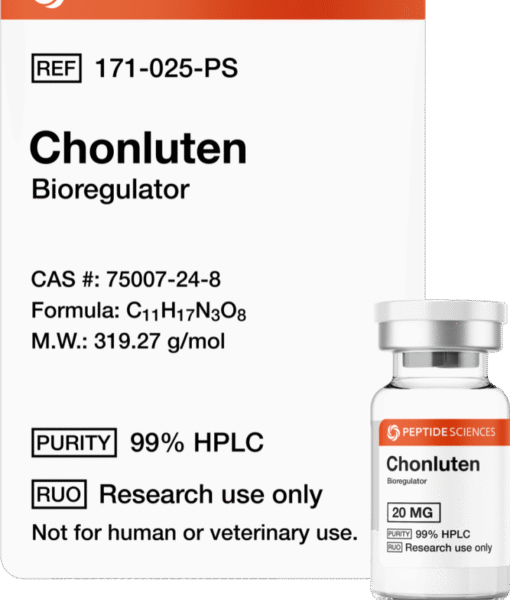
Chonluten Peptide 20mg (Bioregulator)
Chonluten 20mg is a short synthetic peptide bioregulator (Glu-Asp-Gly) associated in the Khavinson research literature with bronchial mucosa.
$65.00 -
Bioregulators
Cortagen Peptide 20mg (Bioregulator)
Cortagen 20mg is a short synthetic peptide bioregulator (Ala-Glu-Asp-Pro) associated in the Khavinson research literature with brain cortex tissue.
$65.00 -
Bioregulators
Livagen Peptide 20mg (Bioregulator)
Livagen 20mg is a short synthetic peptide bioregulator (Lys-Glu-Asp-Ala) associated in the Khavinson research literature with liver tissue.
$65.00 -
Bioregulators
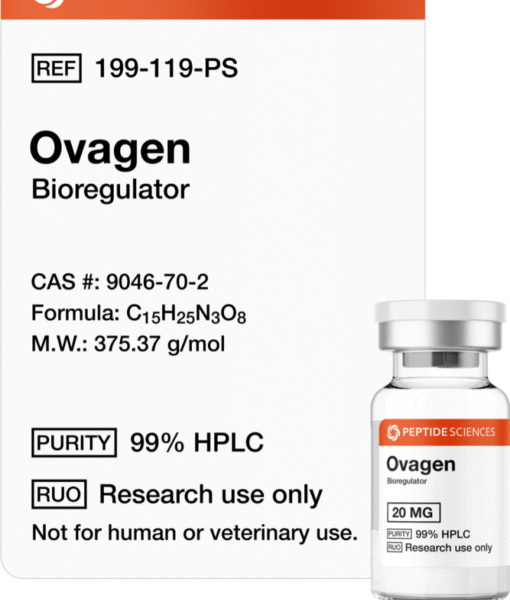
Ovagen 20mg (Bioregulator)
Ovagen 20mg is a short synthetic peptide bioregulator (Glu-Asp-Leu) associated in the Khavinson research literature with liver and gastrointestinal tissue.…
$65.00 -
Bioregulators
Pancragen 20mg (Bioregulator)
Pancragen 20mg is a short synthetic peptide bioregulator (Lys-Glu-Asp-Trp) associated in the Khavinson research literature with pancreatic tissue.
$65.00 -
Bioregulators
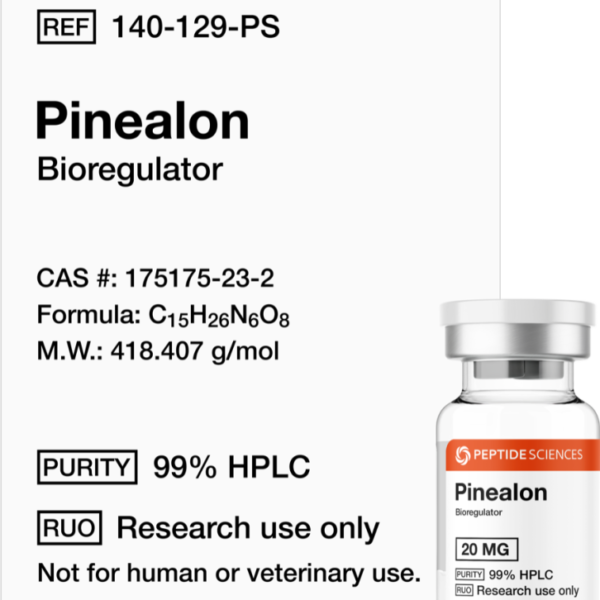
Pinealon 20mg (Bioregulator)
Pinealon 20mg is a short synthetic peptide bioregulator (Glu-Asp-Arg) associated in the Khavinson research literature with brain and nervous tissue.
$75.00 -
Bioregulators
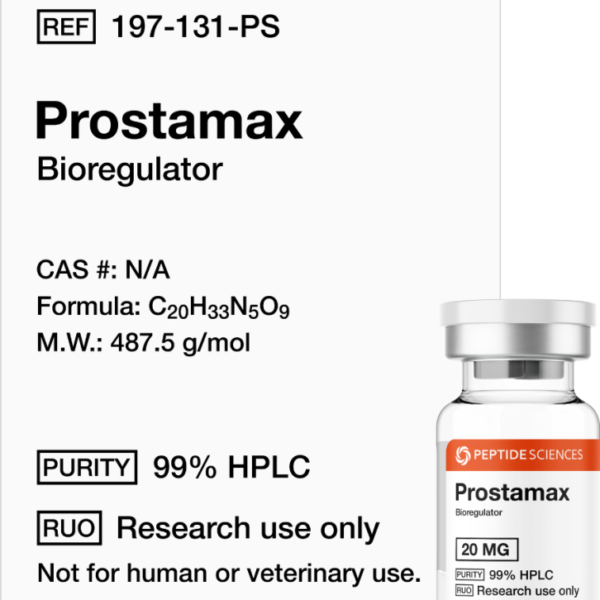
Prostamax Peptide 20mg (Bioregulator)
Prostamax 20mg is a short synthetic peptide bioregulator (Lys-Glu-Asp-Pro) associated in the Khavinson research literature with prostate tissue.
$65.00 -
Bioregulators
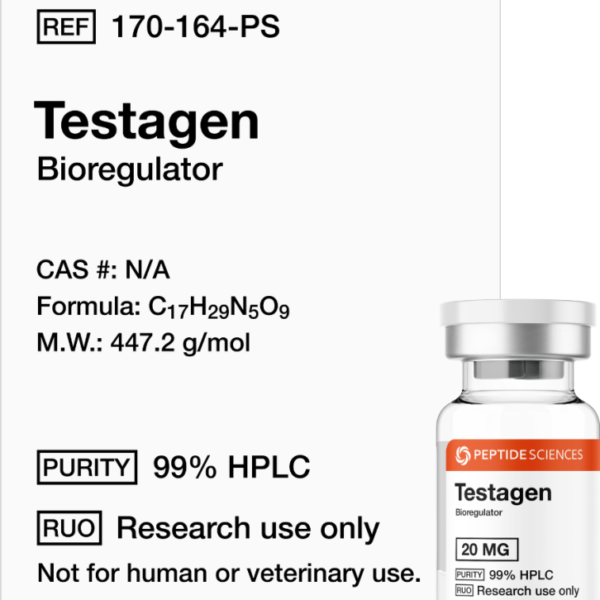
Testagen Peptide 20mg (Bioregulator)
Testagen 20mg is a short synthetic peptide bioregulator (Lys-Glu-Asp-Gly) associated in the Khavinson research literature with testicular tissue.
$65.00 -
Bioregulators
Thymagen (Thymogen) 20mg
Thymagen (Thymogen) 20mg is a short synthetic peptide bioregulator (Glu-Trp) associated in the Khavinson research literature with the immune system…
$80.00 -
Bioregulators
Thymalin 20mg
Thymalin 20mg is a thymus-derived peptide bioregulator studied in immune and aging research.
$120.00 -
Bioregulators
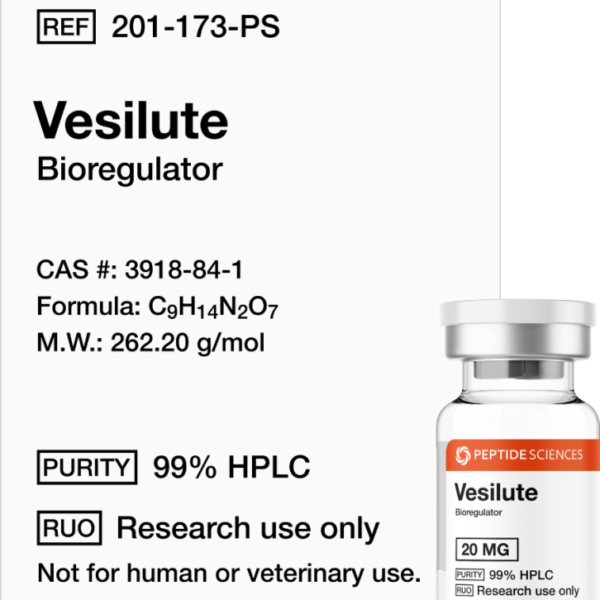
Vesilute Peptide 20mg (Bioregulator)
Vesilute 20mg is a short synthetic peptide bioregulator (Glu-Asp) associated in the Khavinson research literature with bladder tissue.
$65.00 -
Bioregulators
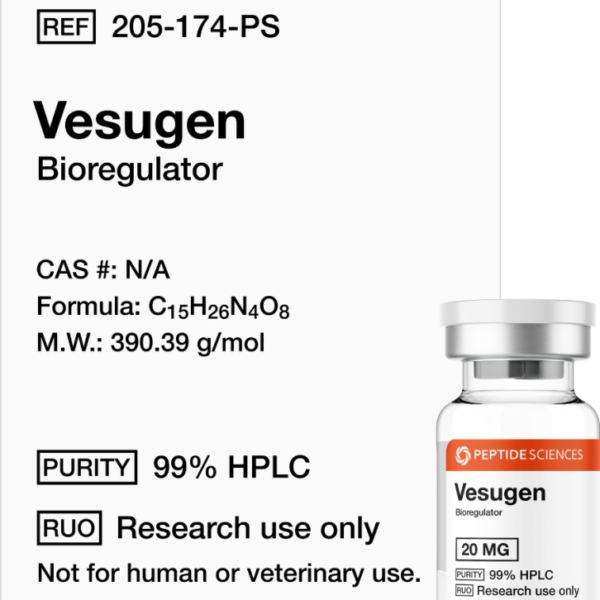
Vesugen Peptide 20mg (Bioregulator)
Vesugen 20mg is a short synthetic peptide bioregulator (Lys-Glu-Asp) associated in the Khavinson research literature with blood vessel tissue.
$65.00







Questions
Bioregulator Peptides: FAQ
What are peptide bioregulators?
They are very short synthetic peptides, usually two to four amino acids, each associated with a specific tissue. They were developed by the Khavinson research group and are studied for tissue-specific effects on gene expression.
How strong is the research behind them?
Most published research comes from one Russian research school, and independent replication outside it is limited. Researchers should take that into account when designing and interpreting studies.
Is Epithalon a bioregulator?
Yes. Epithalon (Ala-Glu-Asp-Gly) is the best known of the family and is studied mainly in telomerase and pineal research. It also appears in our skin and longevity category.
How are they supplied?
As lyophilized powder in 20mg vials, with a lot-linked Certificate of Analysis reporting purity and identity for each batch.
All Peptide Sciences Bio products are sold for laboratory research use only and are not intended for human or veterinary use. Lab results · Reconstitution guide · Contact us