Description
Overview
BPC-157 (Body Protection Compound-157) is a synthetic pentadecapeptide, a chain of 15 amino acids. Its sequence corresponds to a partial fragment of a larger protein first isolated from human gastric juice. Since its characterization in the early 1990s, BPC-157 has become one of the most extensively studied research peptides in preclinical science, with a large body of animal and cell-culture literature examining tissue repair, vascular biology and gastrointestinal integrity.
Peptide Sciences Bio supplies BPC-157 5mg as a high-purity lyophilized powder for in-vitro and preclinical laboratory investigation. The 5mg vial is suited to smaller-scale or pilot studies. Every batch is supported by independent analytical testing and a published Certificate of Analysis.
Product Specifications
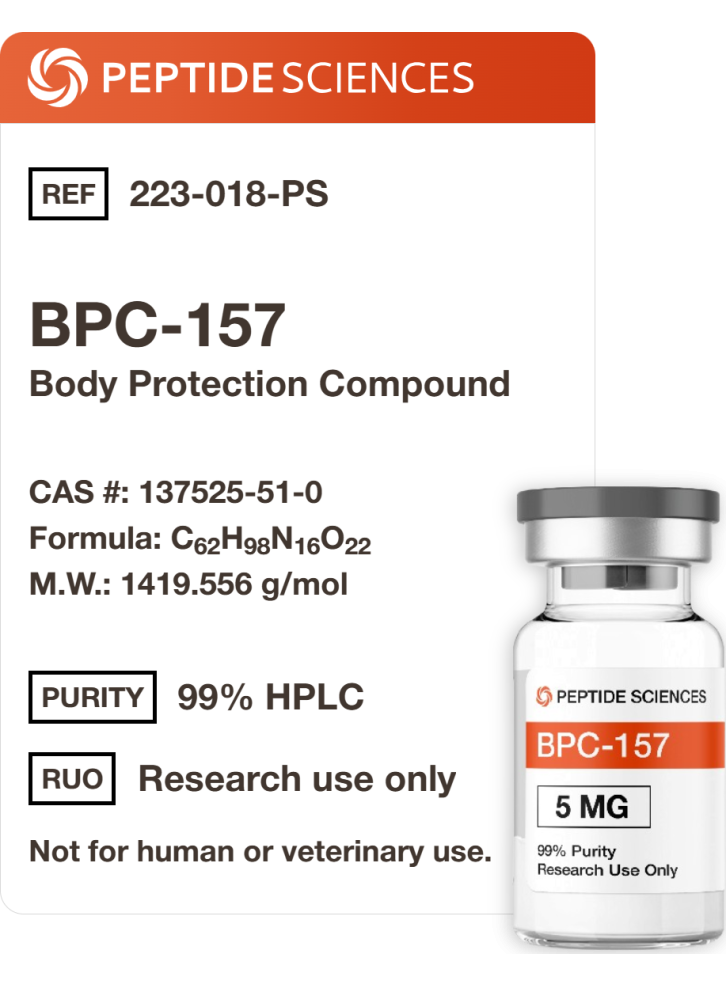
| Product | BPC-157 |
|---|---|
| Quantity | 5mg per vial |
| Sequence | Gly-Glu-Pro-Pro-Pro-Gly-Lys-Pro-Ala-Asp-Asp-Ala-Gly-Leu-Val |
| Length | 15 amino acids |
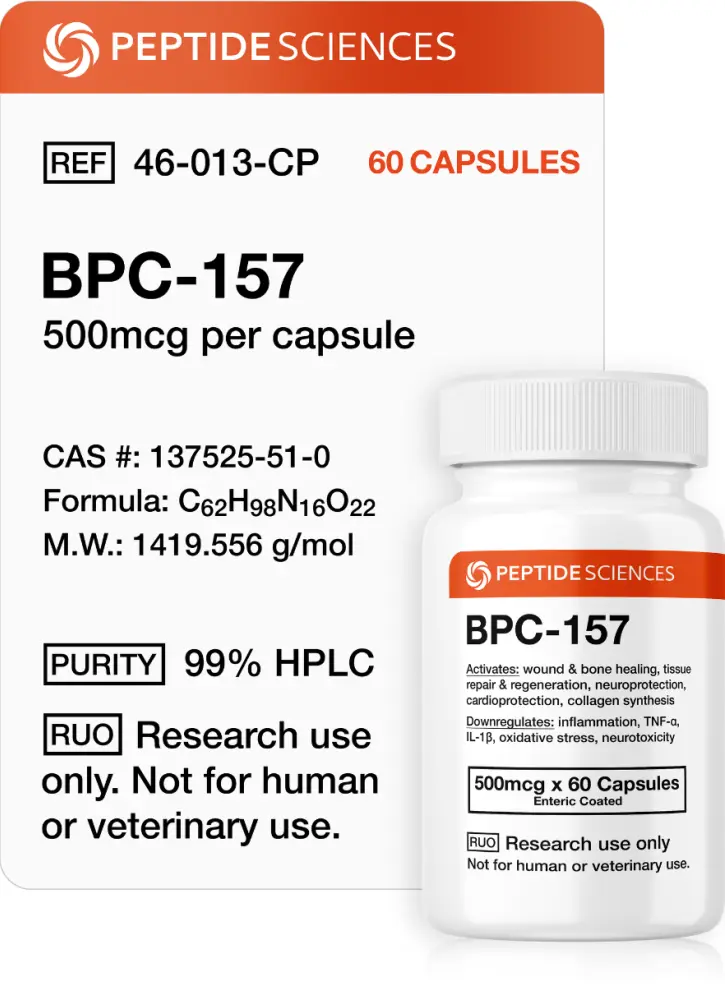
| Molecular formula | C62H98N16O22 |
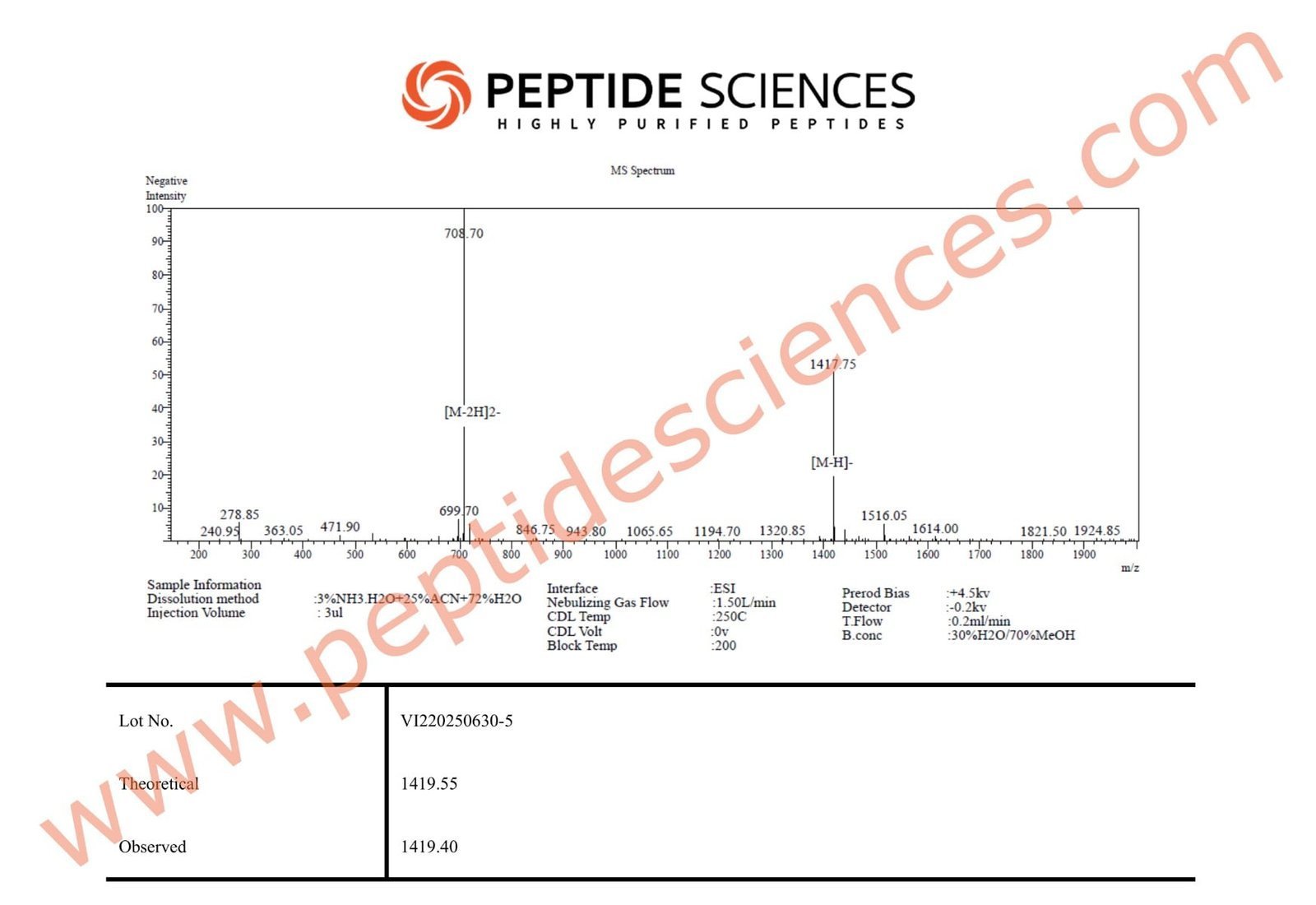
| Molecular weight | 1419.53 g/mol |
| CAS number | 137525-51-0 |
| Form | Lyophilized powder |
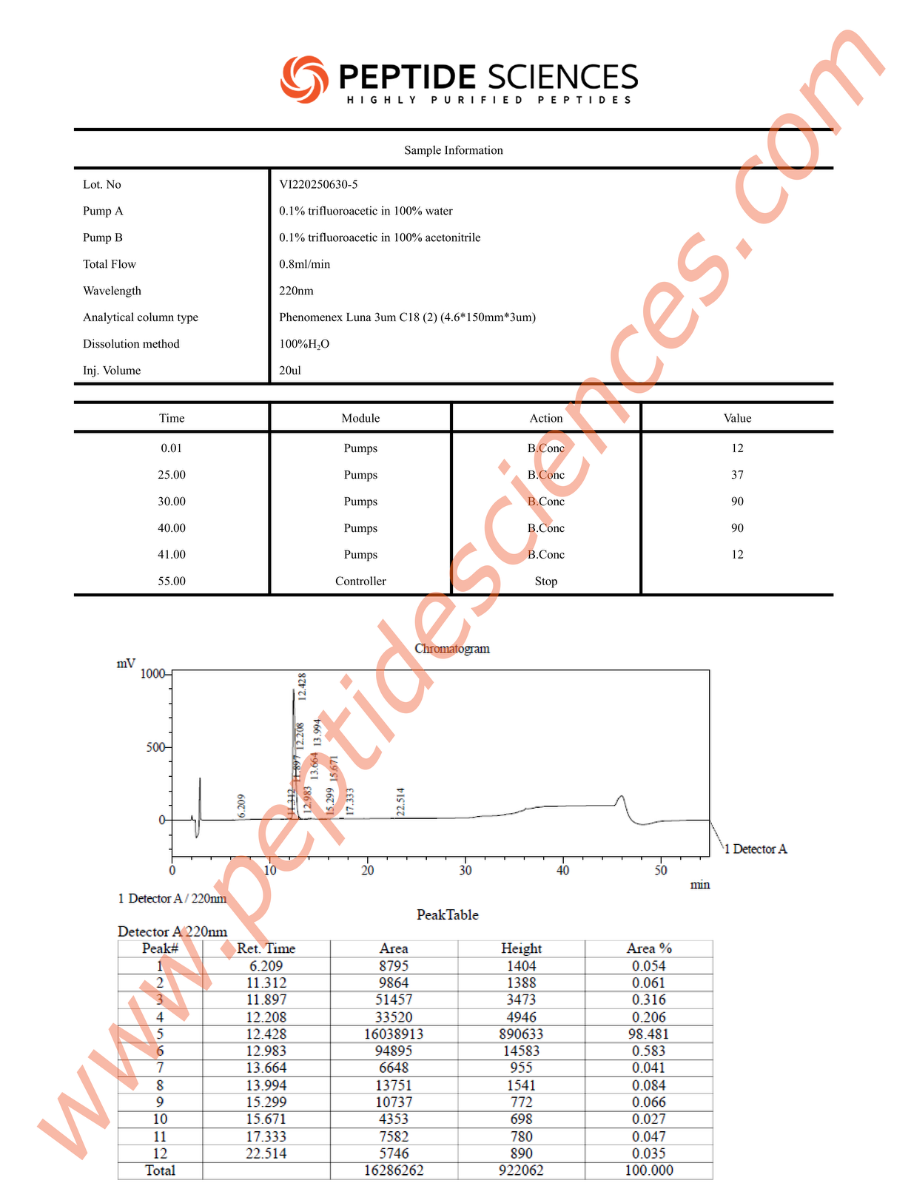
| Purity | ≥99% (HPLC) |
| Documentation | Batch-specific Certificate of Analysis |
Structure & Stability
The BPC-157 sequence is rich in proline: three consecutive proline residues sit near the N-terminus, with a fourth further along the chain. Proline-rich regions tend to resist enzymatic cleavage, which is one reason researchers have noted BPC-157’s unusual stability in gastric juice, where most short peptides degrade rapidly. That stability has made BPC-157 a useful compound in gastrointestinal research models and sets it apart from many peptides that are studied only in parenteral experimental settings.
BPC-157 is most commonly supplied as an acetate salt. An arginate salt form, sometimes called “stable BPC-157,” has also appeared in research settings, where it has been examined for further improved stability in solution. The 15-amino-acid sequence is identical in both forms; only the counterion differs.
Mechanisms Studied
Preclinical research has examined BPC-157’s interaction with several biological pathways:
- Nitric oxide (NO) system: studies in animal models have explored how BPC-157 interacts with nitric oxide signaling, a key regulator of vascular tone and endothelial function.
- Angiogenesis and VEGFR2: research has investigated BPC-157’s relationship with vascular endothelial growth factor receptor 2 (VEGFR2) signaling and the formation of new blood vessels in injured tissue models.
- FAK–paxillin pathway: cell-culture studies have examined how BPC-157 affects focal adhesion kinase (FAK) and paxillin, proteins central to cell spreading and migration.
- Growth hormone receptor expression: research in tendon fibroblast cultures has looked at BPC-157’s influence on growth hormone receptor expression, a topic of interest in connective tissue biology.
- Early growth response gene 1 (EGR-1): studies have explored BPC-157’s interaction with EGR-1, a transcription factor involved in cytokine and growth factor signaling.
Areas of Study
The preclinical literature on BPC-157 spans several research fields:
- Musculoskeletal research: tendon, ligament, muscle and bone tissue models, including tendon-to-bone healing studies in rodents.
- Gastrointestinal research: mucosal integrity, ulceration and fistula models, reflecting the peptide’s gastric origin.
- Vascular research: angiogenesis, endothelial function and blood vessel recovery in injury models.
- Cellular research: fibroblast migration, cell survival and wound-model studies in vitro.
- Neurological research: a smaller body of animal studies has examined BPC-157 in nervous system models.
These findings come from laboratory and animal research. BPC-157 has not been established as safe or effective in human clinical trials.
BPC-157 and TB-500 in Research
BPC-157 is often studied alongside TB-500, a synthetic peptide based on thymosin beta-4. The two are researched for different but complementary mechanisms: BPC-157 is mainly examined for its interactions with angiogenic and nitric oxide signaling, while TB-500 research centers on actin regulation and cell migration. For researchers studying both compounds together, Peptide Sciences Bio offers pre-combined research blends.
Related Research Peptides
- BPC-157 10mg
- BPC-157 15mg
- BPC 157 500mcg (60 Capsules)
- TB-500 (Thymosin Beta-4) 5mg (43aa)
- BPC-157 + TB-500-10mg (Wolverine Stack Peptide)
- BPC-157, TB-500, GHK-Cu 30mg (Glow Blend)
Quality & Testing
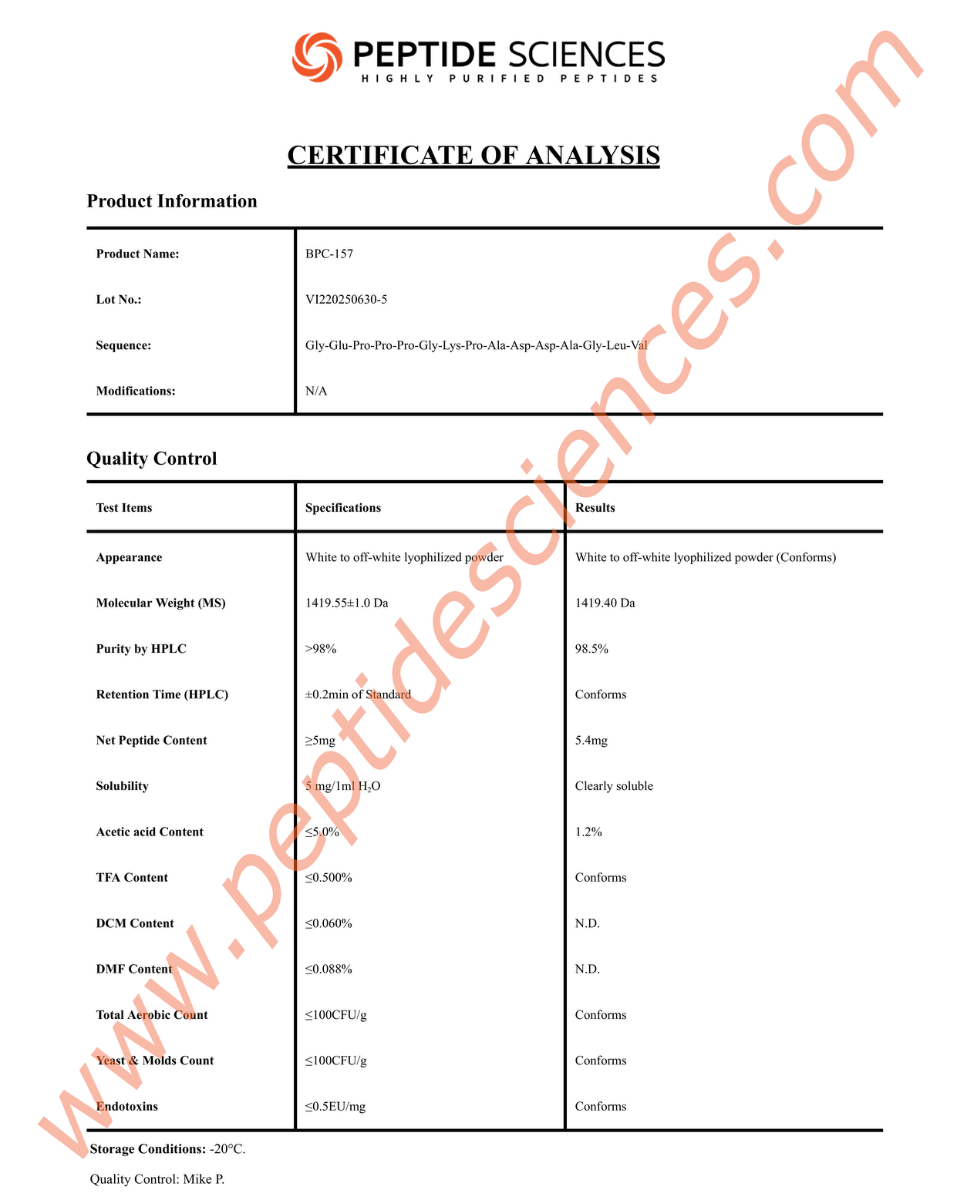
Every batch of BPC-157 is independently tested for identity and purity before release. Testing includes high-performance liquid chromatography (HPLC) to confirm purity and mass spectrometry (MS) to confirm molecular identity. The batch-specific Certificate of Analysis is available on this page and in our COA library, so researchers can verify the exact material they receive.
Storage & Handling
- Store lyophilized BPC-157 at −20°C, protected from light and moisture.
- Short-term storage at 2–8°C is acceptable for lyophilized material.
- Allow the vial to reach room temperature before opening to limit condensation.
- Handle using standard laboratory practices and appropriate protective equipment.
For laboratory solution preparation, see our Peptide Reconstitution Guide.
Frequently Asked Questions
What is BPC-157?
BPC-157 is a synthetic 15-amino-acid peptide whose sequence comes from a protein found in gastric juice. It is studied in preclinical research on tissue repair, angiogenesis and gastrointestinal integrity.
Is BPC-157 approved for human use?
No. BPC-157 is not approved by the FDA or any other regulatory agency for human or veterinary use. Peptide Sciences Bio sells it strictly for laboratory research.
How should BPC-157 be stored?
Lyophilized BPC-157 should be stored at −20°C, away from light and moisture. Short-term storage at 2–8°C is acceptable.
What does the Certificate of Analysis include?
Each COA reports the batch number, HPLC purity results and mass spectrometry confirmation of molecular identity for that specific batch.
What is the difference between BPC-157 acetate and arginate?
Both contain the same 15-amino-acid peptide sequence. They differ in the salt form used to stabilize it. The arginate form has been examined in research for improved stability in solution.
Which BPC-157 vial size should I choose?
Peptide Sciences Bio offers BPC-157 in 5mg, 10mg and 15mg vials, as well as a 500mcg capsule format. The peptide is identical across sizes; the choice depends on the scale and duration of the planned research.
Research Use Only
This product is intended solely for in-vitro research and laboratory experimentation by qualified professionals. It is not a drug, food, supplement or cosmetic, and it is not intended for human or veterinary use, or for the diagnosis, treatment or prevention of any condition. Purchase is restricted to buyers who agree to our Terms of Sale.
Additional information
| Product Form | Lyophilized Powder (Vial) |
|---|
BPC-157 5mg
$59.50 Original price was: $59.50.$49.99Current price is: $49.99.
BPC-157 5mg is a synthetic 15-amino-acid peptide derived from a partial sequence of body protection compound, a protein found in gastric juice. It is widely studied in preclinical models of tissue repair, angiogenesis and gastrointestinal integrity. Supplied as a lyophilized powder at ≥99% purity (HPLC), with batch-specific COA available. For laboratory research use only.
Worldwide tracked delivery. Dispatched within 24 hours of order confirmation.
Not satisfied? Return any item within 10 days for a full refund, no questions asked.